Categorie: Bookkeeping

  • Sum of The Years Digits Depreciation Model Formula, Examples, Journal Entries

    The business entities do not debit the purchase of a fixed asset to an expense account as the asset gives economic benefit for several years. Therefore, the business entities allocate the asset’s costs over its useful life periodically. Although, the amount of depreciation remains the same whether the Company uses the straight-line depreciation method, double declining balance method, or the sum of year digits method. It is just that the amount of timing of the depreciation differs in all three approaches.

    • The unit of production method focuses on the activity or output of the asset in the initial and later years.
    • Depreciation expense under this method is calculated by multiplying the depreciable cost of an asset by the fraction of its remaining useful life and the sum of its years’ digits.
    • Salvage value estimates the asset’s residual worth at the end of its usage.
    • Like the sum of the years’ digits calculated in Step 1, the depreciation base does not change over the asset’s life and therefore only needs to be calculated once.
    • The straight-line method carries out the cost of the asset minus the salvage value, which is then divided by the useful life of the asset.

    Depreciation charges for the first two years of the asset are $45,000 and $30,000 respectively (refer the solution of the example above in case of confusion). Note how the depreciation factor works backward, starting with the largest value (Year 4) before incrementally dropping in each period thereafter. Mr Saravelos said trade policy was likely to remain unpredictable in the coming weeks and months. Analysis by Nomura shows that exemptions on goods including drugs meant 34pc of UK exports would be exempt from tariffs, for now at least. President Trump suggested that the US surplus with countries like the UK, Singapore and New Zealand, which have all been hit with 10pc tariffs, should be even bigger. However, a White House official said the “baseline 10pc tariff” was adopted to stop the “worst offenders” from trying to dodge the tariffs by diverting goods through other countries.

    Fixed assets suitable for sum of years digits depreciation

    Deskera can also help with your inventory management,  customer relationship management, HR, attendance and payroll management software. Deskera can help you generate payroll and payslips in minutes with Deskera People. Your employees can view their payslips, apply for time off, and file their claims and expenses online. With these values, we move on to applying the sum of the years’ formula in a step-wise manner. Accountingo.org aims to provide the best accounting and finance education for students, professionals, teachers, and business owners.

    Starmer to rush through watered-down electric car rules in wake of Trump tariffs

    With Deskera CRM you can manage contact and deal management, sales pipelines, email campaigns, customer support, etc. You can generate leads for your business by creating email campaigns and view performance with detailed analytics on open rates and click-through rates (CTR). However, many definitions for depreciation can collectively elaborate the concept of depreciation in simple terms.

    The Internal Revenue Code permits accelerated how to fill out your form 1040 depreciation methods, provided they are consistently applied. Next, calculate the sum of the years’ digits by adding the sequential numbers representing each year of the asset’s useful life. For example, an asset with a five-year useful life would have a sum of 1 + 2 + 3 + 4 + 5, equaling 15.

    Sum of the years’ digits depreciation uses the assumption that the benefits that the company receives from the fixed asset will go down through the passage of time. It is similar to the declining balance depreciation in which the depreciation expense in the sum of the years’ digits method will go down as time passes making the last depreciation expense the smallest. Where an entity has a policy of calculating depreciation on full years basis, sum of the years’ digits depreciation can be calculated as above. An accelerated depreciation method, the double-declining method calculates depreciation twice as fast as that in the declining balance method.

    Depending on the chosen cost apportionment or depreciation rate, depreciation charges can be variable, straight-lined, or accelerated over the useful life of an asset. The final step is to allocate this total depreciation to each of the years of its useful life in proportion to the remaining life of the asset at the beginning of the year using the sum of the years digits depreciation formula. As the name suggests, the accelerated depreciation method is a category that depreciates assets at a higher rate in the initial years and at a lower rate in the later years. The reason behind this is an assumption that assets generate higher revenue when they are new. Therefore, the greater expense should be recorded as per the matching principle of accounting.

    To illustrate SYD depreciation, assume that a service business purchases equipment at a cost of $160,000. This asset is expected to have a useful life of 5 years at which time it will be sold for $10,000. This means that the total amount of depreciation will be $150,000 spread over the equipment’s useful life of 5 years.

    Disadvantages of Sum of the Years’ Digits Depreciation

    • Sum of the Years Digits is an accelerated depreciation method, meaning more depreciation is expensed in the early years of the class life of an asset.
    • In this method, the cost of an asset’s residual value is subtracted from the original cost of acquisition.
    • Most of the depreciation of an asset is recognized in the first few years of its useful life.
    • For the next year of the asset’s life that ends on 30 September 2022 (Year 2), the remaining useful life will be counted as 3 years.
    • In other words, the difference is in the timing of when the same total amount of depreciation will be reported.
    • Calculate depreciation over the useful life of the asset using the sum of the years’ digits method.

    Depreciation expenses are recorded for accounting purposes and its calculation is, therefore, important to a business. The approach is realistic, and it is allowed under all the accounting standards like GAAP and IFRS. Additionally, the method is useful for the assets that are subject to obsolescence due to new technology or industrial breakthrough. However, if the company has acquired a used asset, the acquisition cost plus costs of operationalizing the asset is recorded as the asset’s cost. The following table contains examples of the sum of the years’ digits noted in the denominator of the preceding formula. The asset has 3 years useful life at the end of which it is not expected to have any salvage value.

    Double-Declining Balance Depreciation Method

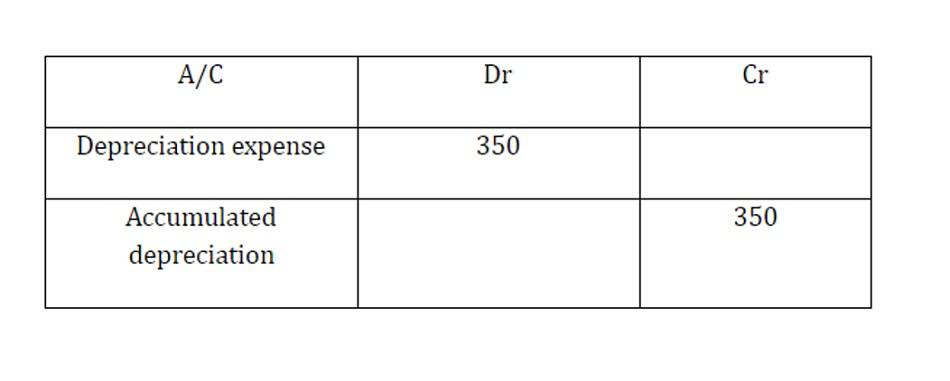
    There will be 5 entries at the end of each year where the company debits the depreciation expense and credits the accumulated depreciation account. Unit of production method calculates depreciation when the asset starts producing units and the cycle ends when the asset stops producing. This method is based on the units produced by assets rather than the time for which the asset is used.

    Sum of the Years Digits Method

    For example, if an asset is purchased halfway through the fiscal year, half of that year’s depreciation expense is recognized. Both GAAP and IFRS provide guidance on prorating depreciation for partial years, emphasizing consistency in financial reporting. For partial asset years, the SYD method requires adjustments to ensure accurate depreciation. This typically occurs when an asset is acquired or disposed of mid-year, necessitating prorated depreciation based on the asset’s actual usage during the fiscal year. The proration involves determining the fraction of the year the asset was in service and applying it to the annual depreciation expense.

    “Put simply, the bigger the nominal trade deficit a country has with the US adjusted for the absolute size of that country’s imports, the bigger the tariff. This determination is highly mechanical, rather than a sophisticated assessment of tariff and non-tariff barriers. Chartered accountant Michael Brown is the founder and CEO of Double Entry Bookkeeping. He has worked as an accountant and consultant for more than 25 years and has built financial models for all types of industries. He has been the CFO or controller of both small and medium sized companies and has run small businesses of his own. He has been a manager and an auditor with Deloitte, a big 4 accountancy firm, and holds a degree from Loughborough University.

    How to Calculate Straight Line Depreciation

    Therefore, the depreciable basis amounts to $40 million, i.e. the cost basis of the fixed asset purchase minus the salvage value. The sum of the years’ digits can be calculated using the formula “(N + 1) ÷ 2”, rather than by manually adding each figure. The quickbooks for contractors sum of the years method assumes that the productivity of the asset is the highest in the initial years and goes on decreasing in the subsequent years.

    The answer is the periodic depreciation that will be deducted from book value in every financial year. An asset’s depreciation base is its initial cost, minus any salvage or residual value at the end of its useful life. Hence, for an asset that has a useful life of 4 years, the un-depreciated useful life to be used in calculating depreciation shall be 4 years in the first year of depreciation, 3 years in the second year and so on. The sum of the years’ digits for this particular fixed asset (PP&E) comes out to 10 years.

    Similarly, Thailand’s goods trade deficit was $45.6bn in 2024, with the country exporting $63.3bn worth of goods last year, resulting in the Trump administration’s “tariffs charged” of 72pc. The table below summarizes the breakdown of the depreciation expenses for each year. It must be noted that the final depreciation expense equals accrual accounting vs cash basis accounting the salvage value of the asset. It considers an even amount for depreciation across the fruitful life of an asset. The straight-line method carries out the cost of the asset minus the salvage value, which is then divided by the useful life of the asset. Depreciation is described as the mechanism to calculate the drop in value of an asset through its useful life.

    In addition the total depreciation is 8,000 which is the same as the cost less the salvage value of the asset. Depreciation is the process of the allocation of fixed assets cost over their useful life. However, the company needs to properly allocate the cost so that the depreciation expense charged to the income statement matches the benefits that the company receives from the fixed assets. This is so that the recognition of the depreciation expense in the company’s account is properly in compliance with the matching principle of accounting. Depreciation is a fundamental concept in accounting, allowing businesses to allocate the cost of tangible assets over their useful lives.

    Sum of years Digits Methods or the sum of year depreciation method is an accelerated depreciation method whereby the method declines the asset’s value at an accelerated rate. Most of the depreciation of an asset is recognized in the first few years of its useful life. Therefore greater deductions are allowed in the starting life of the assets than in subsequent years, mainly in the case of those assets which are heavily used when they are new. Businesses must account for depreciation and there are a few ways to do it, some better suited than others depending on the specific asset.


  • How to Calculate Cost of Goods Sold: Formula & Examples

    Naturally, this figure can help optimize the efficiency of your labor spending, and help you grow your business in a more scalable way. HashMicro is Singapore’s ERP solution provider with the most complete software suite for various industries, customizable to unique needs of any business. Get a free consultation from an expert on global payroll and compliance. You provide them with a $1,500 laptop, and routine G&A costs run you $400. The FUTA tax comes in at 6% of your employee’s salary, up to $7,000.

    You can look at what your direct labor costs are and then come up with pricing that gives you a competitive edge over your competitors. According to the ILOSTAT, labor costs are critical for assessing the competitiveness of enterprises and countries, particularly in the manufacturing sector. Calculating labor costs involves several steps to ensure accuracy and provide an understanding of how your workforce expenses contribute to overall costs. Mastering how to calculate labor costs empowers you to make informed decisions, from budgeting and pricing strategies to resource allocation and cost control. Another issue that can have an impact on your labor costs is how you handle scheduling.

    Factors that determine labor costs

    When employees are outside of this radius, they’ll be unable to clock in or clock out, preventing them from lying or exaggerating about their presence on site. Working instead from knowing his hourly job cost of $34.43 per hour, we can reach this same number with multiplication rather than division. And the payoff for bars and restaurants across the country has been outstanding. That’s because it speaks to your business’s ability to efficiently turn labor into profit. And the better leadership and investors think of your company.

    Taxes

    If not appropriately tracked, these costs can eat into your profits. This calculation provides a broad view of how labor costs fit within overall operational expenditures. It’s useful for budget management and cost control, helping businesses improve efficiency and better leverage their workforce.

    Choose from 12+ different overtime types to determine how pay will be calculated. This visualization of the impact of overtime on your business’s financials can be the jolt you need to optimize employee hours and workloads. Next, you have to account for the annual costs of keeping him on the payroll. These annual costs include things like his insurance, training, employee benefits, and other incentives.

    • The number of human resources professionals in the company for every 100 employees.
    • This does not mean reducing employee wages and cutting corners when it comes to the extra labor costs.
    • To maximize labor cost ROI, HR needs to track employee turnover metrics like overall retention rate and turnover cost.
    • In other words, every other ice cream you sell is going to pay for your labor.

    Labor Cost Formula

    • Direct labor costs include all employee costs tied directly to your product.
    • If any expenses are left out of the calculation, total revenue will be lower than expected.
    • FICA comes directly out of Patricia’s weekly paycheck, and the tech company is required to pay FUCA.

    We can calculate this figure by dividing the total number of products by the total number of direct labor hours needed. When a company sets the sales price for a product, they consider the costs of labor, material, and overhead. The final sales price must include all the expenses the company encounters. No matter what kind of business you’re running, odds are that your labor expenses make up the most significant part of your operating costs.

    And labor cost percentage is a hugely important metric to pay attention to. No matter the size of your business, traditional office spaces incur overhead costs. From rent and utility costs to office supplies and maintenance, physical spaces chip away at your budget. Remote work setups lower overhead costs and can boost profitability in other ways (e.g., enhanced employee satisfaction and productivity, reduced turnover, and reduced recruitment costs). Salaries, wages, and other compensation employees earn for a specific period that haven’t been paid by the company. But there’s more to the picture than just a high revenue per employee.

    Use workforce analytics

    It’s time to take into account all of those other expenses that were touched on above. Benefits should be added on top of gross pay in order to calculate the total labor cost for a given employee. You’ll add these costs into another formula to get that final figure.

    Determine Your Labor Cost Percentage

    The total cost incurred by a business to pay for an employee’s time. Business owners not only need to think about how benefit costs can grow, but also how they might scale. An option like Gusto might be great for a small business but, once you hit 50 employees, it can become disproportionately labor cost formula expensive per head. You’d be better served moving to a different platform, or working directly with healthcare providers. Because they’re earning less than $100,000 per year, you use the wage bracket method to determine federal income tax. This amount is withheld — you’re not actually responsible for it other than remitting.

    Reduce Labor Costs with Timeero

    It’s not uncommon for restaurants and other service businesses to have a labor cost percentage of up to 50%. In other areas, such as heavy industry, the percentage should not be more than 30% to ensure profitability. Next, you have to take into account all related expenses that you owe for Maria, such as taxes and healthcare. Only after you calculate them can you get the actual labor cost per hour for a particular staff member, or the true cost per hour. There are plenty of online labor cost calculators you can use to get a baseline understanding of your employee labor costs.

    For example, hiring a senior Salesforce developer through a recruitment agency at a 15% fee on a $130,000 salary would be $19,500. Compare this to the industry benchmark, where the cost per hire often surpasses $30,210. You also need to calculate the time costs of other employees involved in the selection process. For instance, senior specialists may conduct final interviews or evaluate test tasks.

    Now, you can personalize the calculation based on your company’s total compensation policy by adding additional expenses and employee benefits. For example, between payroll taxes, training, and paid time off, let’s assume an additional annual cost of $6,000. The following examples provide a framework for calculating labor costs generally, accounting for gross pay, absenteeism, and employee benefits, among other costs.

    Staying on top of labor cost calculations and monitoring labor expenses are essential for running a successful company, whatever industry you’re in. You cannot do much about reducing most of the additional labor costs, such as payroll taxes and benefits. Whether you’re running a restaurant, a construction company, or another small business with employees, labor costs are some of the biggest expenses you’ll need to cover. Time tracking is a powerful way to monitor your real-time labor burden. Using a reliable time tracking solution increases the accuracy of labor cost calculations and gives a clearer picture of your overall financial health and business efficiency.

  • State Income Tax Rates, Brackets, Deductions, & Exemptions

    list of state income tax rates

    Withdrawals from retirement accounts like 401(k)s or IRAs are subject to ordinary income tax. Planning when to take withdrawals can help manage bracket shifts. Filing as Head of household enjoys advantageous brackets compared to single filers. They provide favorable rates, acknowledging extra living expenses linked to dependents. This method is designed to recognize shared financial state income tax rates responsibilities in a marriage. Couples combine their incomes, offering potential tax savings through shared brackets.

    list of state income tax rates

    State Income Taxes 2025

    list of state income tax rates

    Iowa enacted comprehensive tax reforms in 2018, 2021, and 2022, and many of these reforms will continue phasing income statement in over the coming years. Effective January 1, Iowa’s nine individual income tax rates were consolidated into four, and the top rate was decreased from 8.53 to 6 percent. Iowa’s graduated-rate tax structure is scheduled to shift to a flat taxAn income tax is referred to as a “flat tax” when all taxable income is subject to the same tax rate, regardless of income level or assets.

    Tips for Filing Taxes as a Freelance Graphics Designer

    It ranks in the bottom three in terms of overall tax burden. At first glance, Ohio’s income tax range of 0.495% to 4,997% doesn’t seem so bad. However, an earning of $1,000 will get you a $36.18 deduction in taxes.

    Highest Taxed States 2024

    Among states with declining tax burdens, Alaska is the extreme example. Before the Trans-Alaska Pipeline system was finished in 1977, taxpayers in Alaska paid 11.7 percent of their share of net national product in state and local taxes. By 1980, with oil tax revenue pouring in, Alaska repealed its personal income tax and started sending out checks to residents instead. The tax burden plummeted, and now Alaskans are the least taxed with a burden of only 4.6 percent of Legal E-Billing income.

    State Corporate Income Tax Rates and Brackets, 2025

    Idaho has a 1% income tax rate, ranking it among the states with relatively low income tax rates. Florida also has a 0% income tax rate, making it one of the states with the lowest income tax rates. The District of Columbia has a 4% income tax rate, ranking it among the places with the highest income tax rates in the US.

    list of state income tax rates

    Utah has a 4.95% income tax rate, placing it among the states with the highest income tax rates in the US. Rhode Island has a 3.75% income tax rate, making it one of the states with the highest income tax rates in the US. Oregon has a 4.75% income tax rate, making it one of the states with the highest income tax rates in the US. Oklahoma has a 0.25% income tax rate, placing it among the states with relatively low income tax rates. North Dakota has a 1.10% income tax rate, placing it among the states with relatively low income tax rates. North Carolina has a 4.99% income tax rate, making it one of the states with the highest income tax rates in the US.

    State Individual Income Tax Rates and Brackets, 2020

    • The good news, though, is property and total sales and excise tax in the state are relatively low at 1.99% and 3.67%, respectively.
    • 1001, enacted in May 2023, Indiana accelerated its previously enacted tax rate reductions, lowering the individual income tax rate from 3.05 in 2024 to 3.00 percent in 2025.
    • It’s vital for taxpayers to understand proposed changes that could impact their taxable income or effective tax rates.
    • This table, and the map above, display the base statewide sales tax for each of the fifty states.
    • For example, Georgia’s taxpayers reach the state’s sixth and highest bracket at $7,000 in taxable income.
    • 380, Idaho’s top marginal individual income tax rate and third-lowest rate were both eliminated.

    This helps reduce the overall tax burden, as only portions of income are subject to maximum rates. If you earn more, some of your income will be taxed at higher rates. It’s important to know which tax brackets apply to your income. 50, which increased the standard deduction for single filers from $3,000 to $3,500. Joint filers’ standard deduction will increase from $7,500 to $8,000. New York and the District of Columbia were the only jurisdictions to enact individual income tax rate increases in 2021.

    • As of January 1, 2022, Mississippi has completed the phaseout of its 3 percent individual income tax brackets.
    • New Hampshire continues to phase out its interest and dividends tax.
    • The future of federal income tax brackets is not set in stone.
    • Ultimately, the highest income levels are subject to the maximum tax rate, which is capped at 37%.

    Free Credit Data

    list of state income tax rates

    In fact, Delaware is among, if not the most, friendly state in terms of taxes. When measuring the burden imposed on a given state’s residents by all state and local taxes, one cannot look exclusively to collections figures for the governments located within state borders. A significant amount of tax shifting takes place across state lines, and this shifting is not uniform. Furthermore, this shifting should not be ignored when attempting to understand the burden faced by taxpayers within a state.

    list of state income tax rates

    Tax Burden by State

    Similarly, Wyoming and South Dakota do without a major business tax, and Alaska has no state-level sales taxA sales tax is levied on retail sales of goods and services and, ideally, should apply to all final consumption with few exemptions. Many governments exempt goods like groceries; base broadening, such as including groceries, could keep rates lower. A sales tax should exempt business-to-business transactions which, when taxed, cause tax pyramiding. (though it does allow local governments to levy sales taxes). Notably, opting to not levy a personal income tax causes a state to rely more on other forms of taxation that might be more exportable.

  • Introduction to Capital Planning Metrics: NPV, IRR, PI CFI

    Enroll in CFI’s Corporate Finance Fundamentals course to develop practical skills to assess capital investments, structure financing, and create value for your organization. Each of these metrics plays a distinct role in capital planning, and no single metric should be used in isolation. For example, a project with a high IRR may seem attractive, but if its NPV is negative, it won’t generate long-term value. NPV measures total value creation, IRR helps compare investment efficiency, and PI ensures capital is deployed effectively when resources are limited.

    Applications in Financial Modeling

    And if free cash flow is your main input, here’s a deeper dive into why free cash flow yield matters in your valuation work. Use a PV table to figure out what those future profits are worth today. A present value table is one of the most versatile resources in finance.

    • In general, projects with a positive NPV are worth undertaking, while those with a negative NPV are not.
    • Assume the monthly cash flows are earned at the end of the month, with the first payment arriving exactly one month after the equipment has been purchased.
    • The costs of each present value include the financing costs, costs of maintenance and operations, and the interest paid for financing the investment.
    • She is currently a senior quantitative analyst and has published two books on cost modeling.
    • However, NPV calculations are based on estimates that can vary with changing market conditions, and unexpected economic shocks can impact their reliability.

    Why Should You Choose a Project With a Higher NPV?

    The result obtained is only as good as the values inserted in the formulas regardless of which Excel method you use. Be sure to be as precise as possible when determining the values to be used for cash flow projections before calculating NPV. You can use an NPV formula in Excel or use the NPV function to get a value more quickly.

    For example, with a period of 10 years, an initial investment of $1,000,000 and a discount rate of 8% (average return from an investment of comparable risk), t is 10, C0 is $1,000,000 and r is 0.08. Use this online calculator to easily calculate the NPV (Net Present Value) of an investment based on the initial investment, discount rate and investment term. Also calculates Internal Rate of Return (IRR), gross return and net cash flow. In most cases, a financial analyst needs to calculate the net present value of a series of cash flows, not just one individual cash flow.

    Lease Accounting (IFRS & GAAP)

    PV tables are great for quick estimates, but they’re locked to whatever interest rates and time periods are printed on the page. At its core, IRR is the discount rate that makes a project’s NPV equal to zero. In other words, it represents the break-even rate of return an investment must achieve to avoid losing value.

    Advantages of Using Present Value Tables

    Also, it does not reflect earnings past this period and can’t account for sharp movements in the cash flow. As I mentioned earlier, this is an investment calculation that is used by all types of investors, not just traditional Wall Street investors. Company management compute the net present value of potential projects, expansions, or new equipment to evaluate what option will perform the best and decide what path the company should take in the future. Below is a break down of subject weightings in the FMVA® financial analyst program.

    You should always consult a qualified professional when making important financial decisions and long-term agreements, such as long-term bank deposits. Use the information provided by the calculator critically and at your own risk. The main use of the NPV formula is in Discounted Cash Flow (DCF) modeling in Excel. In DCF models an analyst will forecast a company’s three financial statements into the future and calculate the company’s Free Cash Flow to the Firm (FCFF). My Accounting Course  is a world-class educational resource developed by experts to simplify accounting, finance, & investment analysis topics, so students and professionals can learn and propel their careers. So Bob invests $100,000 and receives a total of $200,000 over the next ten years.

    Net Present Value Calculator

    Note that only the initial investment is an exact number in the above calculation. To account for the risk, the discount rate is higher for riskier investments and lower for a safer one. The US treasury example is considered to be the risk-free rate, and all other investments are measured by how much more risk they bear relative to that. On the topic of capital budgeting, the general rules of thumb to follow for interpreting the net present value (NPV) of a project or investment is as follows.

    Finally, enter the net cash flow for each year or other period (a maximum of 25 periods are allowed). Make sure you enter the free cash flow and not a cash flow after interest, which will result in double-counting the time value of money. It is used in investment planning and capital budgeting to 15 upselling tips andexamples proven to boost average order value measure the profitability of projects or investments, similar to accounting rate of return (ARR). After the discount rate is chosen, one can proceed to estimate the present values of all future cash flows by using the NPV formula. Then just subtract the initial investment from the sum of these PVs to get the present value of the given future income stream. The discounted cash flows are inclusive of the cash inflows and cash outflows; hence, the usefulness of the metric in capital budgeting.

    There’s also an XNPV function that’s more precise when you have various cash flows occurring at different times. The present value formula is applied to each of the cash flows from year zero through year five. The cash flow what is bank reconciliation definition examples and process of -$250,000 results in the same present value during year zero.

    Frequently Asked Questions (FAQs) About Present Value Tables

    • The formula works in the same way, however, each cash flow has to be discounted individually, and then all of them are added together.
    • Using WACC is fine in the case of borrowed capital whereas if it is calculated from the point of view of investors and shareholders it can be chosen so it reflects the rate of return they expect.
    • If, on the other hand, an investor could earn 8% with no risk over the next year, then the offer of $105 in a year would not suffice.
    • This means that you would be indifferent between receiving $1,300 a year for the next 5 years or receiving $4,928.02 today, assuming a discount rate of 10%.
    • Just be sure to match the table type (annuity vs lump sum), frequency, and discount rate to the specifics of the financial instrument.
    • Businesses use NPV to compare multiple investment options, ensuring that capital is allocated efficiently.

    A company will try to pay its own bills late while encouraging customers to pay early so they can maximize the benefit of this fact. It means that a given amount of money held in the hand today is worth more than the same amount of money a year hence. Further, money held in the hand now could increase in value if invested with interest. NPV is still used today to make investment decisions and determine if an investment is worth pursuing.

    The Net Present Value (NPV) is the difference between the present value (PV) of a future stream of cash inflows and outflows. You expect that the factory will begin generating the output of products or services by the second year and onward if it’s successfully established in the first year with the initial investment. This will result in net cash inflows in the form of revenues from the sale of the factory output. Let’s say you’re contemplating setting up a factory that’s going to need initial funds of $250,000 during the first year. This is an investment so it’s a cash outflow that can be taken as a net negative value.

    A negative NPV shows that a potential investment will not be profitable. When the NPV is negative, this usually means it’s the role of standard costs in management not a good investment and should be avoided, however, some companies will take on projects with a NPV of $0 or that’s negative for various reasons. It can also be used for forecasting cash inflows and outflows of a project, analyzing business purchases, making large purchases, such as real estate or equipment, and in startup businesses seeking investors.